

Sports programming –
"how did it all start"?
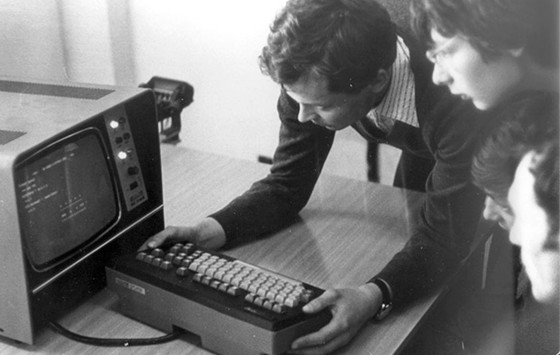
Sports programming was born long before the Internet (the worldwide information network). One of the origins of the sport is considered to be the International Collegiate Programming Contest (ICPC), which was first held back in 1970, in Texas. Teams from local universities used S/360 computers during the competition, Fortran was used as the programming language, and codes were written on punched cards. Subsequently, ICPC has grown to an international scale, becoming one of the largest sports programming Olympiads in the world.
In the USSR, similar competitions began to be held in 1981, with the Olympiad in programming among schoolchildren. The Olympiad was held in Moscow, and four people took part in it. Seven years later, in 1988, the Olympiad reached the All-Union level, and since then it has become an integral part of school Olympiads. It is worth noting that a more standard version of sports programming involves a team competition. The All-Russian Team Olympiad of Students in Programming (VKOSHP) is more suitable for this definition.
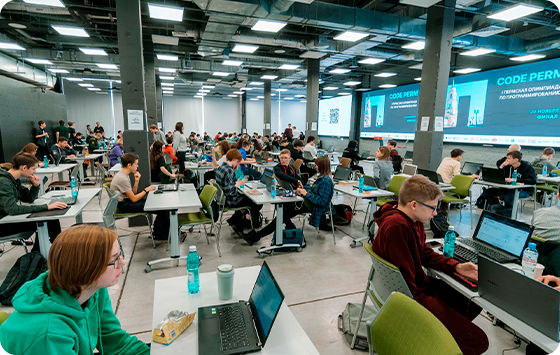
In the 2000s, following the spread of the Internet (worldwide information network), sports programming began to take place in an online format. Thanks to this, among other things, sports programming has rapidly begun to gain popularity. Already in 2018, the ICPC league included 52,000 students from 3,233 universities from all over the world. Large-scale modern competitions include: events held on the Codeforces and TopCoder online platforms; individual Google Code Jam and Russian Code Cup competitions; the IOI (International Olympiad in Informatics) Olympiad.